Slow Light
Night Observation and the Waxing Gibbous Tide
Twilight lingers long over the Salish Sea in late August, fading slowly into a quiet silver dusk. Standing on the gravel shore of Semiahmoo Spit, the low tide exposes damp eelgrass beds while cool marine air moves gently across the water. High above the eastern horizon, the waxing gibbous moon climbs into a clear sky, casting a soft glow over the saltwater. Off in the distance, high above the forest overlook at Little Mountain Park, the dark silhouette of the Skagit Valley stretches outward under the swelling lunar light. August nights bring a welcome relief from the baking heat of dry afternoons. In the darkness, ground evaporation slows, soil cools, and plant tissues regain moisture drawn down during midday stress.
Stepping into the garden at night shifts how we perceive ecological movement. Under the pale halo of the harvest air, bright garden colors dissolve into subtle shades of silver, gray, and white. This nocturnal environment operates on a calm, steady rhythm. Rather than forcing rapid daytime growth, the night garden focuses on structural maintenance: balancing water pressures, releasing fragrant essential oils, and welcoming nocturnal pollinators. Watching these slow nighttime transitions deepens our understanding of how maritime systems conserve energy through the dry tail of summer.
Lunar Illumination and Nocturnal Botany
As the moon swells through its waxing gibbous phase, night light intensity increases steadily toward full. This growing luminosity alters how plants interact with their surroundings. While photosynthesis rests until dawn, many silver and white-flowered species reach their peak visual and scent production after dark.
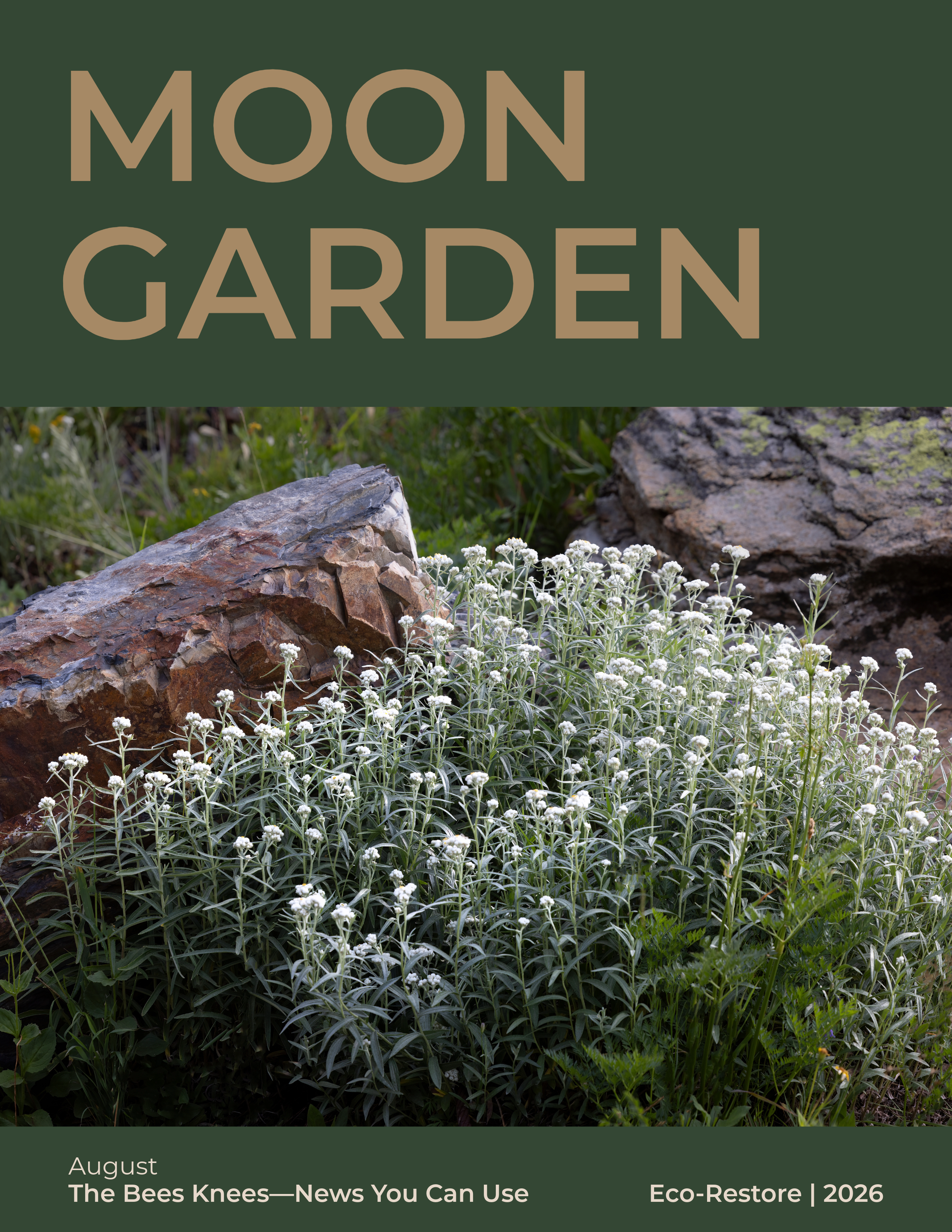
Consider Anaphalis margaritacea (Western Pearly Everlasting), a native perennial whose dry, papery white bracts catch moonlight with quiet intensity. The small, clustered blossoms reflect soft light across dry garden edges, marking pathways for night-flying moths. Beside it, the fine, silvery-gray foliage of Artemisia absinthium (Wormwood) glows under the waxing moon. Wormwood releases its sharp, bitter aromatic oils into cool evening air, deterring nocturnal herbivores while protecting delicate leaf surfaces from moisture loss.
These lunar-adapted plants demonstrate how subtle structural traits thrive in low-light environments. The dense, woolly hairs on pearly everlasting leaves trap a micro-layer of humid air against stem tissue, reducing night water loss. Similarly, the aromatic compounds in wormwood foliage become volatile in cool air, forming an invisible protective envelope around the plant base. Observing these nocturnal adaptations encourages us to design garden spaces that remain active and visually engaging long after the sun sets.
Earthy Reflection in Capricorn
During this waxing gibbous alignment, the moon passes through the constellation Capricorn, an earth sign associated with structural endurance, slow foundation-building, and patient discipline. In lunar gardening traditions, an earth sign alignment during a waxing phase offers an ideal moment for ground-focused observation and quiet site maintenance.
Capricorn’s earthy influence encourages us to look past superficial surface growth and pay attention to root structures and subsoil moisture dynamics. During hot August weeks, topsoil often bakes into a hard crust, masking damp earth beneath. Walking through garden beds under the Capricorn moon, you can test soil moisture by touch, noticing where deep roots still draw water and where localized mulching is needed.
This alignment also invites a disciplined approach to late-summer harvest preparation. Rather than rushing through major site overhauls, nocturnal stewardship focuses on quiet, deliberate tasks:
Identify pale and luminous plants to map night pollinator corridors across your site.
Assess subsoil dampness by hand beneath heavy mulch layers to evaluate irrigation depth.
Observe nocturnal insect activity on night-blooming flowers to track beneficial predator populations.
Gather aromatic herb leaves like wormwood during cool night hours when essential oil concentrations remain high.
Celestial Events Over the Marine Horizon
Late August nights offer a dramatic atmospheric display as the Perseid meteor shower reaches its annual peak. Looking northeast toward Mount Baker from coastal viewpoints, quick flashes of light streak across the dark sky as cosmic dust burns upon entering the upper atmosphere.
Seeing brilliant meteor trails cross paths with the steady glow of a waxing gibbous moon creates a striking contrast between rapid cosmic bursts and slow, deliberate terrestrial cycles. In the garden, this pairing serves as a reminder that lasting stability is built through steady, incremental accumulation rather than sudden, explosive change.
As we explored in our recent guide to sowing second-spring fall crops, working with natural timing allows us to maintain productive growing spaces without exhausting our soil or energy. The quiet buildup of light during the waxing gibbous phase mirrors the gradual establishment of fall seedbeds beneath damp soil covers.
Fostering Depth Through Observational Design
Observing your land at night opens a fresh perspective on how ecological systems self-regulate. When you spend time in the garden after dark, you begin to notice microclimatic shifts—a cool air pocket settling in a low swale, or warm heat radiating off a stone retaining wall long after sunset.
Our team at Eco-Restore helps landowners incorporate these subtle night dynamics into long-term land planning. Through our specialized ecological design services and foundational land philosophy, we assist clients in creating resilient, multi-layered site plans that honor both daytime productivity and nocturnal ecological health. By designing with native moon-lit flora, natural stone thermal masses, and water-retentive soil structures, we help you build a deep, enduring connection with your land across all hours of the day.
As midnight approaches, step outside and let your eyes adjust to the soft lunar light. Listen to the gentle rustle of dry leaves in the night breeze, feel the cool dampness settling over the soil, and watch the moon path trace its slow arch across the sky.
How does observing your garden under moonlight change the way you plan for its future growth?