The Conversation with the Rain
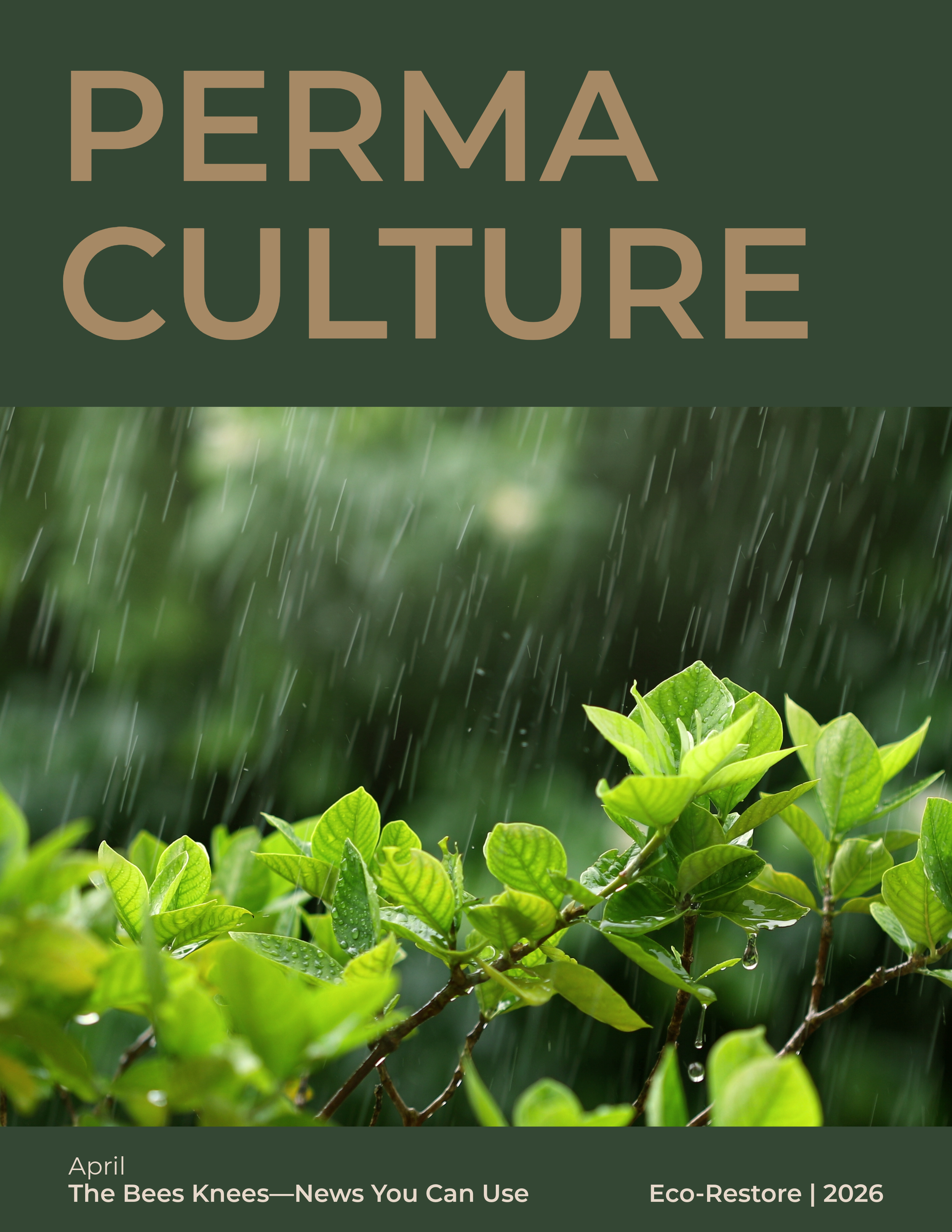
Learning to listen when the garden talks back
The gardener stands at the edge of the woods where the light begins to stretch, feeling the heavy, cool dampness of a spring morning seep through a waxed cotton jacket. At this time of year, the landscape is a chorus of "more"—more light, more rain, more buds swelling on the elderberry. But in the quiet pockets of the garden, there is a different kind of movement happening, one that requires a steady eye and a willing heart. The rough sandstone bowls at Larrabee State Park hold the morning’s rain, creating a temporary mirror that reflects the gnarled branches of the overhanging Douglas firs and the sudden, frantic flight of a winter wren. To see the landscape clearly, one must first be willing to look at what is being reflected back.
The Wisdom of the Brake Pedal
In the lineage of ecological design, the fourth principle, Apply Self-Regulation and Accept Feedback, serves as the system's conscience. If the first three principles are about the "go" of the garden—observing, connecting, and harvesting—this principle is the gentle, necessary "whoa." It is the understanding that for a system to be truly sustainable, it must be able to govern itself. This involves setting limits on our own consumption and, perhaps more importantly, developing the humility to listen when the earth tells us we’ve gone too far.
How often do we approach our landscapes with a list of demands rather than a set of questions? We want the tomatoes to ripen faster, the hedge to grow taller, or the drainage to disappear into the ground instantly. But the land has its own pace. When we ignore the feedback of a yellowing leaf or a soggy patch of lawn, we are essentially ignoring the system’s attempt to find balance. A puddle in the path is a mirror for the soil's current capacity, showing us exactly where the earth is full and where it needs our help to breathe again.
Listening to the Maritime Pulse
In the Pacific Northwest, feedback often arrives in the form of water. As the spring rains continue to saturate the river valleys and foothills, the land provides immediate data on our design choices. Out on the catwalks of Spencer Island, the Snohomish River pushes against the old dikes, its surface a wide mirror for the shifting clouds of the estuary. The way the water moves through the marsh—slowing down, dropping sediment, and finding the path of least resistance—is a masterclass in self-regulation.
In our own backyards, this principle manifests as the "April check-in." Self-regulation means resisting the urge to plant out the heat-loving starts just because the sun stayed out for three hours on a Tuesday. It is the discipline to wait for the soil temperature to catch up to our ambitions. When a late frost nips the tender new growth of a mock orange, the plant is providing feedback. Is it in a frost pocket? Did we prune it too early, forcing growth before the weather was stable? These are not failures; they are the garden’s way of refining our partnership with it.
Reading the Script of Growth
As the daylight lingers longer into the evening, the feedback loop accelerates. We see which seeds have the vigor to punch through the heavy clay and which ones need more friable "duff" to survive. Are we observing the patterns of the pollinators as they return to the early blooming salmonberry? The presence—or absence—of these creatures is a mirror of the health of our local micro-ecosystem. When we apply self-regulation, we might decide to leave that "messy" corner of the yard untouched, recognizing that the feedback from the native bees is more valuable than a tidy aesthetic.
Practical Steps for the Reflective Gardener
Applying this principle doesn't require a degree in ecology, just a pair of boots and a quiet mind. To truly integrate self-regulation into your rhythm, consider these immediate actions:
Establish "Observation Stations": Choose three specific spots in your garden to sit for ten minutes each week. Bring a notebook. What is the soil telling you? Where is the water sitting? This practice creates a mirror for the subtle changes that happen when you aren't looking.
Audit Your Inputs: Look at the "stuff" you bring into your garden—fertilizers, plastic pots, new plants, or even your own labor. Ask yourself: "Can I achieve this result by supporting the system’s natural functions instead?"
Adjust Based on Performance: If a plant has struggled for three seasons in the same spot, accept the feedback. It is not "failing"; it is simply in the wrong place. Move it, or replace it with something that thrives in those specific conditions.
Practice Conservative Pruning: Especially with our native evergreens and spring-flowering shrubs, less is often more. Observe how the plant responds to a single cut before committing to a major overhaul.
Cultivating the Long View
At Eco-Restore, we believe that the most resilient landscapes are those where the human hand is light and the ecological feedback loop is tight. Whether we are conducting a professional consultation, coaching a new gardener through their first spring, or designing a complex multi-acre food forest, our goal is to help you build a system that eventually needs less of you. We look for the ways the land is already trying to heal itself and provide the structural support to make that possible.
When we learn to self-regulate, we move from being the masters of the garden to being its most attentive students. We begin to see that every struggle in the landscape is an invitation to look closer. The silvered mirror of standing water in the vegetable bed isn't an obstacle; it's a map. It tells us where the life is, where the breath is held, and where the future of the garden is waiting to emerge.
As you walk your rows this week, take a moment to look into the reflections found in the damp earth and the bright, new leaves. What is the garden asking of you, and more importantly, what is it asking you to stop doing?