The Night-Shift
The Radiance of the Boundary
There is a specific, haunting clarity that comes with a Full Moon in May. As the silver light spills across the quiet, glass-like surface of Lake Stevens, the hard lines of the town gardens soften into a tangled flow of shadow and glow. The water here acts as a massive lunar mirror, catching the white light and casting it upward into the undersides of the weeping willows that line the shore. This month, we are treated to a rare celestial event: a Blue Moon, the second full moon within a single calendar month. Under this extraordinary light, the garden is fully revealed in a spectrum of grays and pearls, inviting us to look closely at the places where one thing ends and another begins.
In the night garden, we find ourselves naturally drawn to the marginal spaces. While the center of the lawn or the main vegetable beds may feel exposed and flat under the high moon, the edges are where the magic gathers. It is here, at the threshold between the cultivated and the wild, that the luminous hem of the landscape is stitched. This observation honors the principle of valuing the marginal; it is a reminder that the most intense biological and sensory activity often occurs at the boundaries. Have you ever noticed how the perfume of the garden seems to pool in the corners, held captive by the hedges and the fences?
The Silver Sentinels of the Coast
To truly experience the power of the May moon, one must look to the rugged margins of our region. On the rocky, wind-swept coastline of Vendovi Island, the moon reveals a landscape of stark contrasts. The salt-tinged wind carries the rhythmic pulse of the Salish Sea against the basalt cliffs, where the native grasses lean into the silvered darkness. Here, the landscape doesn’t bother with the polite tidiness of a town garden; it thrives on the edge of the abyss. The moonlight catches the spray of the waves and the pale, sun-bleached driftwood, creating a natural border that is both fierce and beautiful.
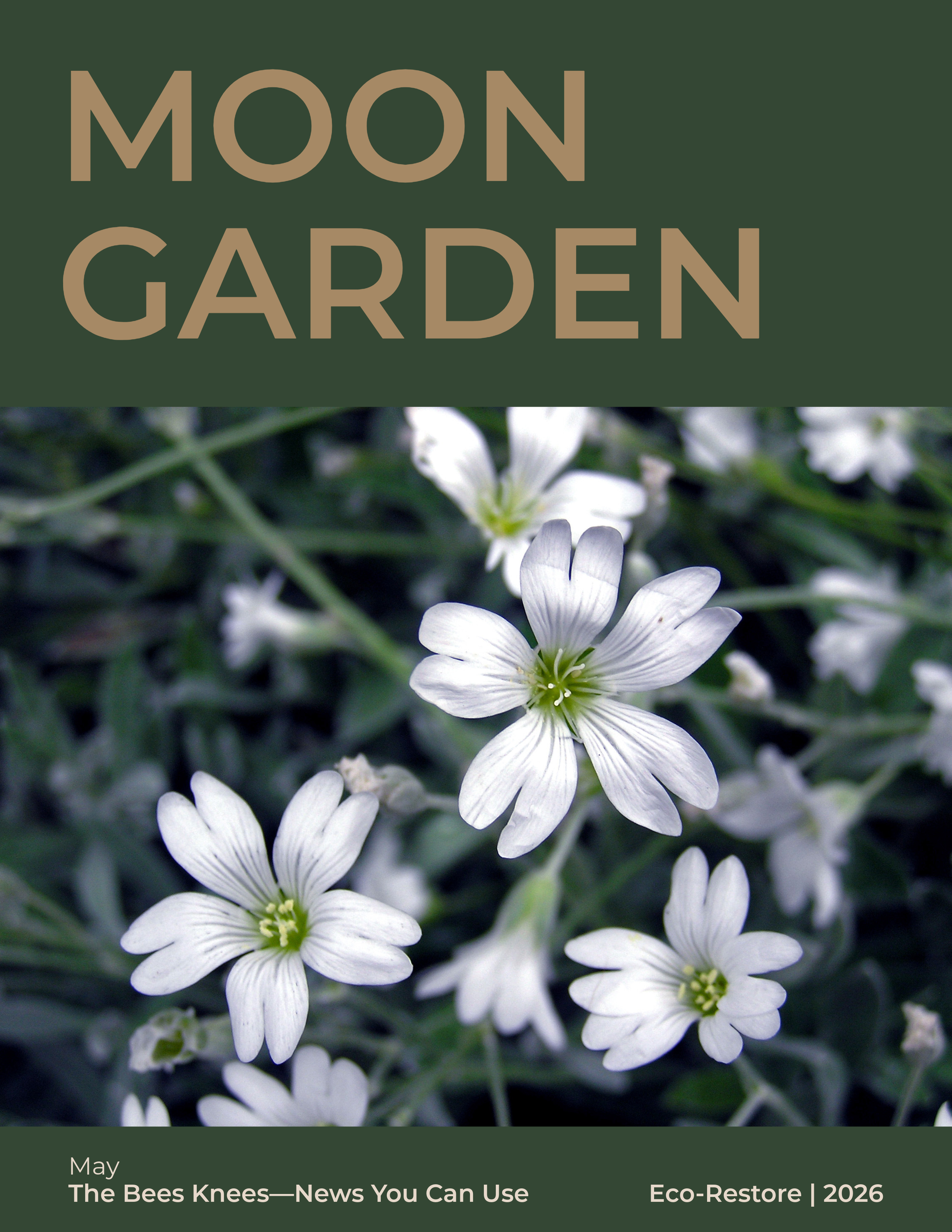
This coastal edge is a masterclass in resilient design. The plants that survive here have adapted to the spray and the wind, turning their marginal position into a position of strength. In our own gardens, we can mimic this by planting silver-foliaged species that thrive in the reflective light of the moon. The Cerastium tomentosum (Snow-in-Summer) is a master of this tactic. Its small, silver-gray leaves and mass of tiny white blossoms create a low-growing carpet that seems to glow from within when the moon is full. It defines the edge of a stone path with a brilliance that no solar light can replicate. By placing these high-contrast plants at our boundaries, we create a clear, glimmering perimeter that guides us through the night.
The Subconscious of the Soil
The May moon passes through the sign of Scorpio, a zodiac sign that demands depth and introspection. Scorpio doesn't care for the superficial; it wants to know what is happening in the dark, hidden layers of the soil. In the garden, this translates to a period of intense, quiet transformation. While the plants are reaching toward the light, their roots are negotiating with the fungi and bacteria in the deep, damp earth. This is a time to practice reflective observation, to step back from the physical labor of the day and listen to the garden’s internal monologue.
The night-shift workers of the ecosystem—the sphinx moths and the ground beetles—are at their most active now. They are the consultants of the night, performing an audit of our blooms and keeping pest populations in check at the margins. Does it feel like a secret meeting is taking place every time you step out onto your porch at midnight? The Scorpio energy encourages us to honor these hidden relationships. This introspective approach is similar to how we obtain a yield of knowledge through observation, a practice we leaned into during the early spring. By understanding the night, we become better stewards of the day.
The Tactile Edge
Weaving texture into the moonlight.
To ground the ethereal light of the Full Flower Moon (the traditional name for a full moon that occurs in May), we look to plants that offer a sensory experience beyond the visual. The Stachys byzantina (Lamb’s Ear) is an essential herb for the moon garden. Its thick, velvety leaves are covered in silver-white hairs that catch the lunar glow, but their true value is in their touch. Lining a garden bed with these soft, woolly leaves creates a physical boundary that invites interaction. It is a reminder that the garden is a three-dimensional experience, and even in the dim light, we can navigate by the feel of the foliage.
We support gardeners in developing these deeper relationships with their landscapes through our design and coaching services, helping you create a space that is as vibrant at midnight as it is at noon. A well-designed moon garden is not just about white flowers; it is about contrasting textures and strategic placements that value the marginal light. Whether you are looking out over the water or tending a small town lot, the moon provides the final, luminous touch to our ecological work.
A Lunar Practice for the Full Moon
Walk your perimeter after dark and notice which parts of your garden catch the light and which remain in deep shadow. This will inform your future moon garden plantings.
Observe the pollinators of the night. If your edges are quiet, consider adding more white, fragrant flowers like the Snow-in-Summer to support the marginal workers of the ecosystem.
Practice tactile navigation by feeling the silver foliage of herbs like Lamb’s Ear; notice how the moisture of the night changes the texture of the leaves.
Sit in silence at a threshold—a gate, a porch, or the edge of the water—and feel the transition of the air as the moon climbs the sky.
The garden is never truly still. Under the silvered threshold of the May moon, we are reminded that the most important work often happens in the spaces we are just beginning to understand. Whether you are looking to revitalize a marginal corner of your yard or design a fully integrated moon garden, we are here to help you value every inch of your land. We are the keepers of these in-between places, the stewards of the woven stream that connects the soil to the stars. As we move toward the longest days of the year, take a moment to stand in the silvered light and listen to the quiet, persistent wisdom of the edges. What is your landscape trying to tell you when you aren't busy telling it what to do?