Where Starlight Settles
The Quiet Curve of Light
December in Washington arrives quietly, asking for a slower breath. Nights lengthen, the air sharpens, and the land seems to lean inward. On the cusp of the solstice, when the sun arcs its lowest across the sky, illumination becomes something subtle and sacred—caught in frost, pooled in puddles, gathered in the thin crescent of the moon.
This is a month when the garden teaches us to witness gently, to move carefully, and to let even the dimmest light guide us.
This December, the waning crescent invites us into a season of release, restoration, and the deep-root work that happens unseen.

Under the Waning Crescent
The waning crescent is the last curve of light before the moon’s rebirth. It’s a time for clearing old material, preparing soil, pruning for health, and strengthening the foundation of next year’s growth.
The waning crescent is the phase for clearing, composting, and tending the roots of next season’s garden.
In December, this moon slips through Capricorn, an earth sign known for endurance, bone-deep wisdom, and attention to long cycles. Capricorn governs structure—stones, roots, the forms that hold a garden steady through storms. Its influence calls us to assess what truly supports us, and what can gently be let go.
As you stand in your winter beds, ask:
What is ready to be released? What needs strengthening before the light returns?
Landmarks in the Dark Season
On the shortest days of the year, it’s often the smallest glimmer of lights that anchor us.
At the Stillaguamish River near Arlington, morning mist rises in slow curls above the dark water. Cottonwoods along the banks stand leafless now, revealing the intricate architecture of branches—winter’s own skeletal map. Standing here in the hush of the river’s breath, you can feel the wisdom of the waning crescent: clarity through letting go, beauty in simplicity.
Have you paused long enough lately to notice what emerges when everything unnecessary falls away?
Farther north, the Skagit Valley flats stretch out beneath expansive winter skies. Frost paints the harvested fields silver before sunrise, creating a quiet shimmer that feels almost lunar. The emptiness of these fields isn’t a lack, but a promise—the resting place where next season’s abundance gathers strength.
And on Fidalgo Island’s Rosario Beach, the ebbing tide reveals dark stones slick with salt and starlight. It’s a perfect place to watch the Ursid Meteor Shower around December 22–23—those brief streaks of falling light tracing across the sky like celestial seeds. With the moon thin and gentle, the moment is generous: meteors fall freely, and the night feels wide open.
The waning crescent and the Ursid meteors together offer a lesson: brightness doesn’t have to be loud. It can be fleeting, subtle, and still deeply transformative.

Night Gardens in the Solstice Season
A garden designed for night invites a different kind of awareness. In winter, with the solstice pressing closer and darkness settling early, our senses shift. Sound sharpens and year-round scent becomes a guide. Pale petals glow even in low light.
Two plants pair beautifully with this month’s moon phase and celestial rhythm—and offer winter gardeners a way to dream into the next season:
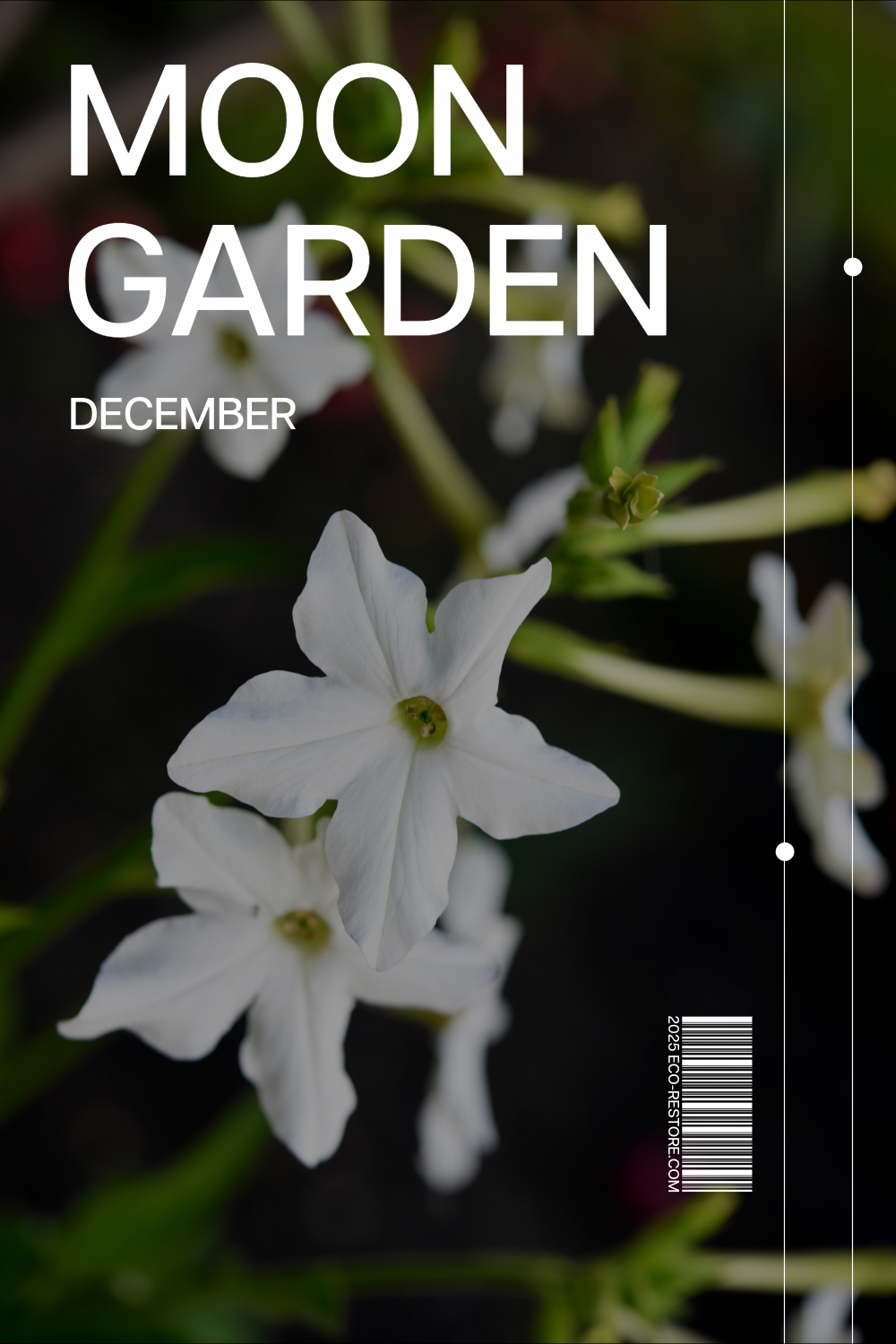
Flower: Nicotiana alata (White Flowering Tobacco)
Its star-shaped blossoms unfurl at dusk, releasing a soft, luminous fragrance. They don’t compete with daylight; they wait for the moon. In a summer bed, their white petals catch even the faintest glimmer—moonlight, starlight, or the quiet shine of a frosted path. They embody Capricorn’s quiet discipline: patient by day, radiant by night.
Herb: Origanum majorana (Sweet Marjoram)
Silver-green leaves make this herb a gentle reflector in a night garden. Its warm, comforting scent edges into the air when brushed, a whisper of warmth in the cold months. Traditionally associated with protection and blessing, marjoram is a fitting companion for solstice reflection and winter hearth tending.
Planting for the night teaches us that beauty doesn’t disappear in darkness—it simply shifts how it wants to be found.

How to Garden with the Waning Crescent This Month
• Clear debris from beds to prevent overwintering pests
• Prune for health, structure, and long-term strength
• Add compost to nourish soil biology during its winter rest
• Plan next year’s garden architecture: trellises, pathways, raised beds
• Tend to perennials and roots—this is their season of slow, inward power
As the solstice brings the year’s longest night, consider what you want to carry forward, and what can be laid gently down.
What in your garden—and in your life—needs spaciousness to rest? What wants one more act of care before the light returns?
How Eco-Restore Can Support You This Winter
Eco-Restore can help you move through this inward season with purpose and clarity. Whether you’re hoping to refine your garden’s structure, create a night-friendly planting plan, strengthen soil health, or map out next year’s vision, we’re here for thoughtful, seasonally aligned guidance.
Winter is the perfect time for dreaming, planning, and planting ideas that will take root in the months ahead.
Let the quiet curve of the waning crescent guide you this December. May its soft light remind you that reflection is a form of growth, and stillness is a kind of strength.