Resilient Systems
Tactical Late-Summer Rhythms for Hydration and Harvest Preservation
The dry heat of late August puts maritime garden beds under quiet strain. Soil moisture evaporates quickly under dusty afternoons, leaving shallow roots parched and vulnerable to sudden temperature spikes. Out along the forested slopes near Heybrook Ridge, dense conifer canopies filter high sun, casting deep shade that keeps soil cool and retains essential ground moisture. Meanwhile, down along the tidal marshes of Fidalgo Bay Aquatic Reserve, salt breezes sweep across open mudflats where coastal plants survive late-summer drought by holding tight to every drop of water.
In our garden beds, reacting to late-summer heat with drastic actions—such as flooding sun-baked soil at midday or drenching stressed foliage—often causes harm. A far better strategy relies on subtle management techniques that protect soil life, prevent fungal outbreaks, and preserve harvested alliums for winter eating.
Deep, Focused Irrigation Mechanics
Watering a late-summer garden effectively requires timing rather than massive volumes of water. When you spray dry soil quickly on a warm afternoon, water evaporates before reaching deep roots, leaving plants dependent on constant surface dampness.
To build deep soil hydration without wasting water, transition to targeted early-morning soaking schedules. Water your garden beds before 10 a.m. while air temperatures remain cool and ground surfaces absorb water efficiently. Apply water slowly at ground level using soaker hoses or drip lines. Directing water straight to root zones keeps subsoil damp while keeping plant leaves completely dry.
For cool-weather crops like lettuce, spinach, and fall starts, evening watering provides a refreshing cool-down after a hot day. Lowering soil temperatures at night reduces plant stress and prevents leafy greens from bolting prematurely into bitter seed heads.
Avoid erratic watering patterns. Inconsistent soil moisture causes tomatoes to split, cucumbers to turn bitter, and summer squashes to suffer from blossom end rot. Delivering 1 to 2 gallons of water per plant each week, spread evenly over two or three deep soakings, keeps soil moisture stable through late August.
Powdery Mildew Prevention and Control
As August progresses, warm days combined with cool, humid nights create ideal conditions for powdery mildew spores to settle on dry plant foliage. This white, flour-like dusting commonly appears on older leaves of summer squash, cucumbers, and pumpkins. The fungus feeds on leaves experiencing drought stress, robbing plants of photosynthetic energy just as fruit swells.
Catching fungal outbreaks early with simple sprays halts spore reproduction without harming beneficial insects. At the first sign of pale dusting on lower leaves, apply a mild baking soda spray to alter leaf surface pH:
Baking Soda Formula: Mix 1 teaspoon of baking soda and 4 drops of liquid insecticidal soap into 1 quart of warm water.
Garlic Extract Formula: Blend 1/4 pound of fresh garlic cloves with 1 quart of water and 1 tablespoon of insecticidal soap for 5 minutes, strain out solids through cheesecloth, and dilute 1 part concentrate to 10 parts water.
Spray affected plants thoroughly once a week, coating upper and lower leaf surfaces. Because fungal spores thrive on dry leaves from water-stressed roots, keeping subsoil consistently damp and applying a 1/2-inch topdressing of finished compost around squash bases provides essential mineral nutrients like calcium and potassium.
If you notice heavily infected, yellowing leaves at the base of your squash plants, prune them off cleanly with sharp hand shears. Removing dead foliage opens up air movement through plant stems, bringing the cool shadow beneath the canopy into sunlight and allows leaves to dry rapidly.
Curing Alliums for Long Storage
Harvesting garlic, bulbing onions, and shallots in late summer is deeply satisfying, but keeping those bulbs sweet through winter depends on how carefully you handle them during curing. It is a humble act—pulling dirt-caked roots from dry soil and waiting three weeks for paper skins to form.
Garlic is ready for harvest when 50 percent of its lower leaves turn yellow, while onions signal readiness when green necks soften and collapse onto soil. Dig gently beneath bulbs with a garden fork to loosen roots rather than yanking stems, which damages bulb necks and opens tissues to fungal rot.
Follow this simple curing protocol:
Gently brush off loose soil from roots and outer paper layers using your fingers. Avoid washing harvested bulbs with water, as moisture trapped under skin layers encourages mold.
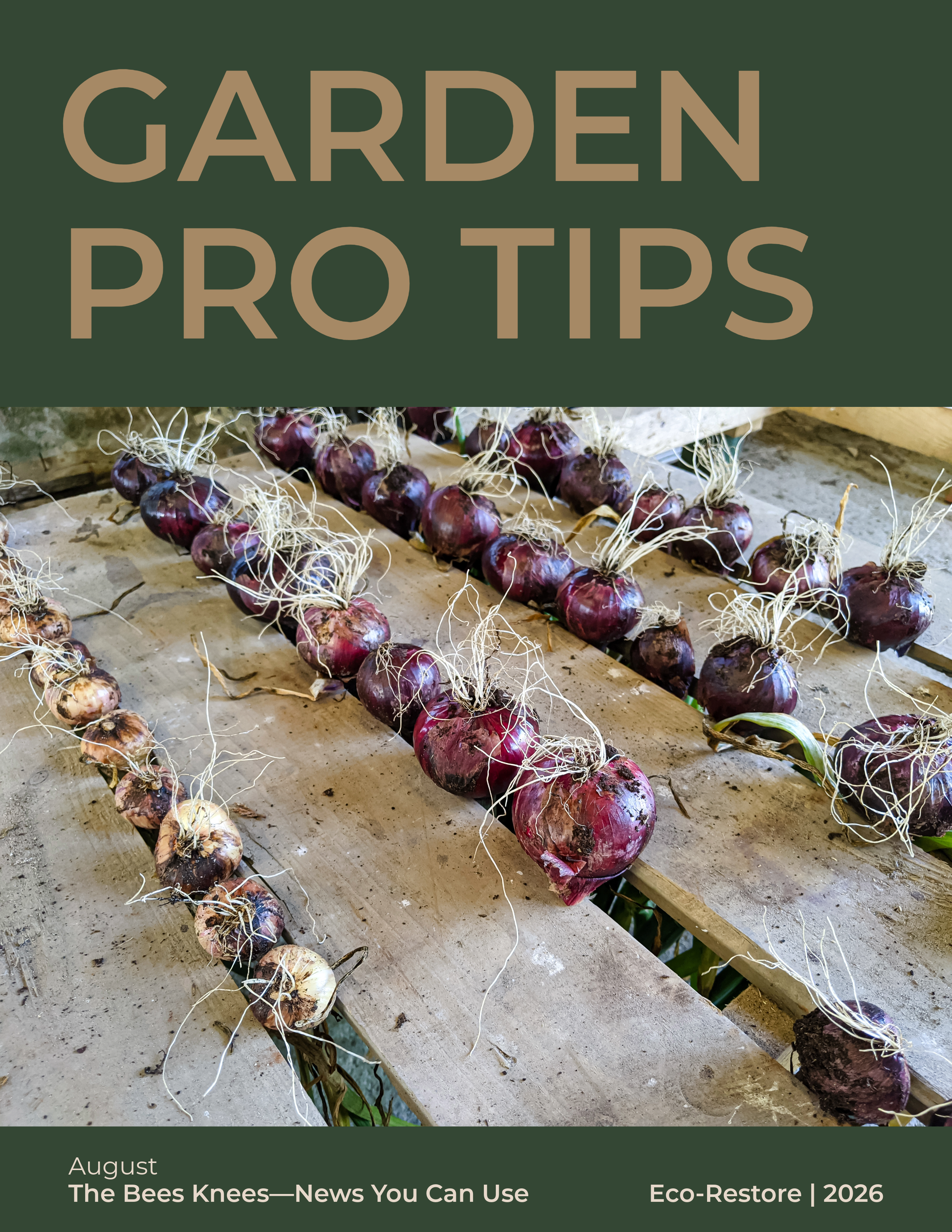
Spread harvested alliums in a single layer across clean cardboard, newspaper, or slatted wood tables in a warm, dry area out of direct sunlight. Ensure individual bulbs do not overlap so air circulates freely around every root base.
Allow bulbs to dry undisturbed for two to three weeks until all green leaves wither, roots turn brittle, and outer skins feel as paper-crisp as dry parchment.
Trim dried stems and roots for final storage. Cut hardneck garlic stems down to a 2-inch neck, trim onion tops back cleanly, and store cured bulbs in mesh bags or open wooden crates in a cool, dark, well-ventilated space between 45°F and 55°F.
Building Practical Mastery with Eco-Restore
Applying simple, timely adjustments transforms seasonal garden maintenance into a rewarding practice. When you understand how water, air, and fungal spores interact across your microclimate, managing late-summer beds becomes logical and effective.
Our team at Eco-Restore supports landowners in mastering these practical techniques. Through our personalized coaching programs and comprehensive design services, we guide you through hands-on site management, custom irrigation design, and soil-building protocols tailored to your property. As we discussed in our recent guide to sowing second-spring fall crops, steady, observant care lays the foundation for year-round abundance.
Step into your garden as evening light softens. Check the moisture three inches beneath your squash roots, look closely at leaf undersides, and enjoy the quiet aroma of curing garlic drying in the shade.
What subtle adjustment in your watering or curing routine brought the most noticeable improvement to your harvest this season?