Catching the Lunar Drift
Why Your Garden Needs a Night Audit
The high tide of spring growth often arrives with a loud, green insistence that can overwhelm the senses. By mid-April in the Pacific Northwest, the landscape is a riot of expansion, yet there is a quiet, corrective energy that moves through the garden when the sun dips below the Cascades. Under the silvered gaze of the last quarter moon, the landscape undergoes a subtle internal audit. It is a time when the frantic pace of the equinox begins to steady itself, allowing a naturalist to observe the quiet efficiency of a system that knows exactly when to hold back.
Watching the darkness settle over the landscape reveals a different kind of movement. A single drop of dew falls from a cedar bough into a puddling depression, creating a small, concentric ripple that moves across the surface of the water. This movement is not just a visual event; it is a signal of the garden’s capacity to respond to its own weight and saturation. The way the water moves outward, meeting the edge of the soil and returning a soft vibration, reflects the essential conversation between the earth and the sky.
The Moon’s Quiet Correction
Releasing the Weight of the Surge
As the moon enters its last quarter, the lunar pull begins to retreat, drawing energy down into the roots and the structural bones of the landscape. While the waxing phases represent the inhale of the garden, this waning period is the long, necessary exhale. In this phase of release, the garden begins to shed what it cannot sustain. It is a period of internal auditing where the landscape evaluates the feedback of the early spring rains and adjusts its growth accordingly.
This lunar rhythm encourages a natural slowing down, much like the patience we practiced when waiting for the soil to wake up last month. The soil, often saturated by the persistent April drizzles common to the Skagit Valley, needs this pause to process the sudden influx of nutrients and moisture. At the Tennant Lake boardwalk, the water levels among the reeds sit at a precarious height, the surface occasionally disturbed by the soft ripple of a rising amphibian. The estuary knows how to apply self-regulation, allowing the overflow to settle into the marshes rather than rushing the banks. In our own gardens, this is the time to observe where the water lingers too long and where the plants are signaling for a bit more breathing room.
Capricorn’s Iron Roots
When the last quarter moon passes through the sign of Capricorn, a sense of disciplined structure settles over the night garden. Capricorn is the sign of the mountain goat—resilient, grounded, and deeply aware of the long game. This zodiacal influence highlights the skeletal beauty of the garden: the stone paths, the sturdy trunks of the Garry oaks, and the well-defined borders that keep the wilder edges in check.
A Capricorn moon demands a practical assessment of the garden's foundations. It is less about the ephemeral bloom and more about the enduring system. Are the supports for the peas sturdy enough for the coming winds? Is the mulch layer deep enough to protect the soil from the compaction of a heavy downpour? This disciplined energy asks us to look at the garden as a series of interconnected structures that must withstand the feedback of the environment. The resilience of the landscape is found in its ability to bend without breaking, much like the way a ripple encounters a stone and simply moves around it, maintaining its form while acknowledging the obstacle.
The Luminous Watch
In the deepening shadows of the forest edge, certain plants seem to capture and hold the dimming lunar light, acting as beacons for the nocturnal world. These species do not shout for attention; instead, they offer a steady, luminous presence that guides the observer through the landscape. We saw a similar lunar harvest of light with the early spring blooms, but as the season advances, the sentinels change.
Trillium ovatum (Western White Trillium) stands as a testament to the garden’s patience. These three-petaled wonders emerge from the forest floor of the Boulder River trail, their white faces glowing against the dark, damp duff of the hemlock grove. They are the quiet auditors of the forest, appearing only when the soil temperature and light levels are in perfect balance. To see them is to understand the garden’s ability to wait for the right moment. Their white petals eventually fade to a soft, bruised purple—a piece of visual feedback telling us that their seasonal work is nearly complete.
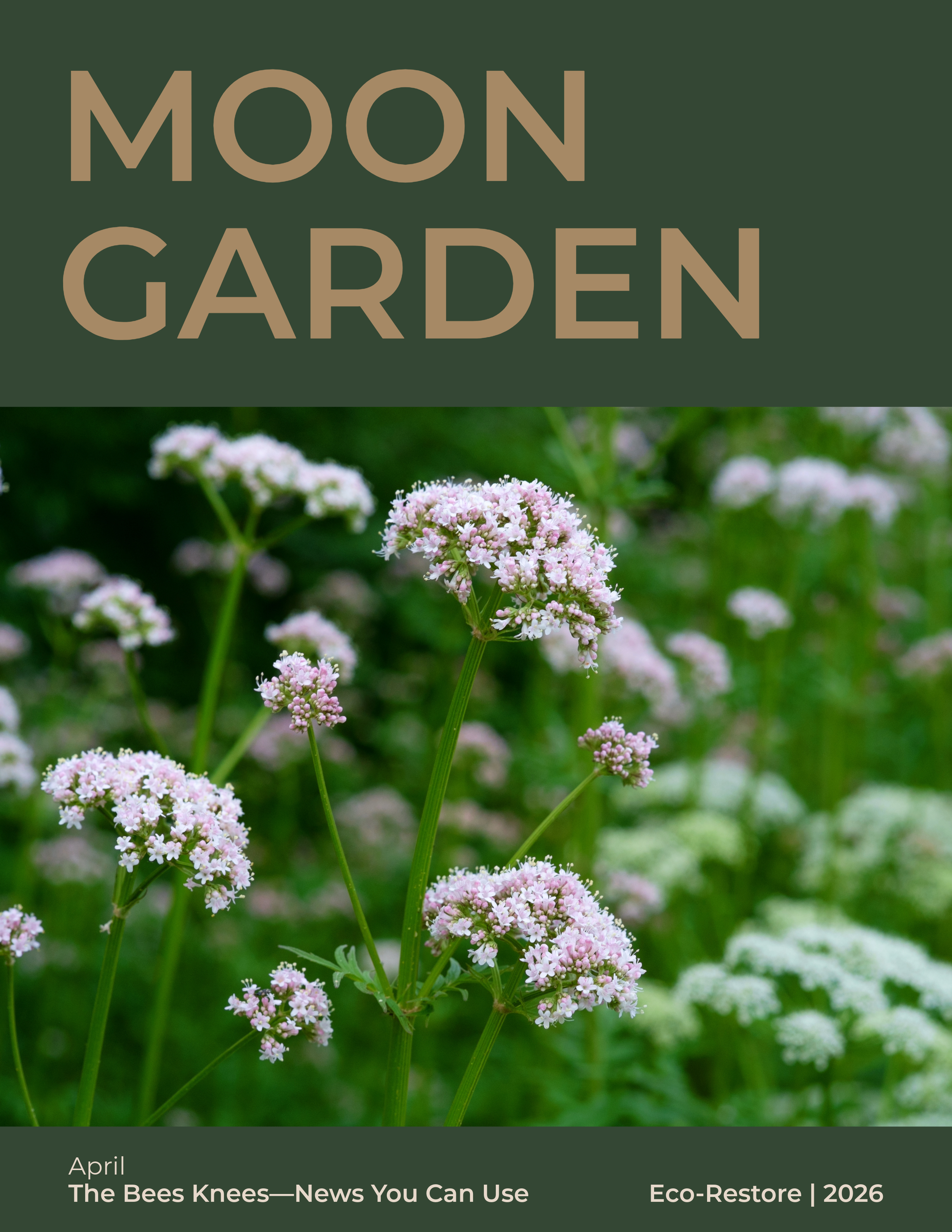
Accompanying the trillium in the moonlit border is Valeriana officinalis (Valerian). While its height can be imposing, its lace-like clusters of pale flowers possess a structural elegance that perfectly mirrors the Capricorn influence. The scent of valerian at night is heavy and sweet, drawing in the moths that navigate by the moon's light. The herb serves as a bridge between the garden’s physical structure and its sensory atmosphere. It is a plant that thrives on the feedback of the night, its hollow stems and deep roots reflecting a system that is both sturdy and receptive.
Listening to the Landscape
Stepping into the night garden is an act of deep observation. The cooling air of a Snohomish evening carries different information than the midday sun. It tells us which parts of the garden are retaining heat and which are shivering in the damp. When we walk the paths, the soft ripple of our own movement through the air triggers a response in the plants—the subtle swaying of a fern, the closing of a petal.
Are we listening to the signals our plants are sending, or are we forcing our own agenda onto the soil? The last quarter moon invites us to be the observer, to take the feedback of the previous weeks and use it to refine our approach. Developing a deeper relationship with the landscape requires a willingness to stop doing and start noticing. Whether it is through seasonal awareness or a more formal garden design process, the goal is always to move in harmony with the natural rhythms of the Pacific Northwest.
There is a profound satisfaction in seeing a garden that has learned to regulate itself. By providing restorative coaching for those looking to deepen their ecological literacy, we aim to foster landscapes that are not just beautiful, but resilient. The garden is not a static picture; it is a living, breathing feedback loop that is constantly adjusting its course.
As the moon sinks toward the horizon, casting long, skeletal shadows across the beds, we are reminded that every action we take in the garden creates a ripple that extends far beyond the fence line. How will you respond to the quiet corrections your landscape is offering this month?